Winter is coming: How to protect your vehicle during the cold months

Winter is tough on vehicles. Your wrap is no exception.
Between road salt, slush, freezing temperatures, and everything else winter throws your way, your vehicle wrap has its work cut out for it. And while it’s built to handle the elements, a little TLC goes a long way.
The last thing you want is to head into spring with a wrap that’s seen better days. Staining, lifted edges, and a dull finish aren’t exactly the look you had in mind when you invested in your branding.
Luckily, keeping your wrap in great shape through winter doesn’t require a complicated maintenance routine. Just a few good habits and a little extra attention when the weather gets rough.
Here are eight ways to keep your wrap looking its best this winter, whether you have one vehicle or a whole fleet.
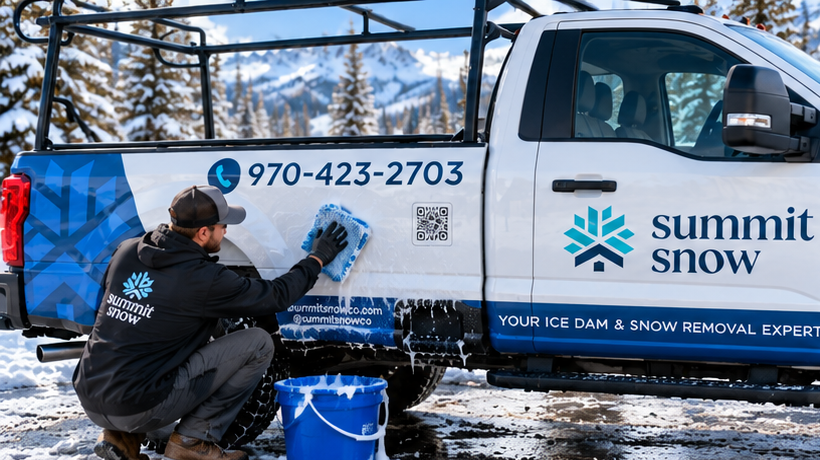
1. Wash more often, not less
We get it. Washing your vehicle when it’s freezing outside probably isn’t high on your to-do list.
Unfortunately, winter is when your wrap needs a bath the most.
Road salt and de-icing chemicals love to hang around on your vehicle, where they can slowly wear away at the finish and adhesive along the edges.
Aim to wash wrapped vehicles every 1 to 2 weeks in winter, and sooner after a big storm or a stretch of salted roads. Pay extra attention to the lower panels, wheel wells, and rear doors, where slush and grime build up fastest.
The takeaway? A little extra washing now can save you some headaches come spring.
2. Hand wash only
We know the drive-through car wash is convenient. But when it comes to protecting your wrap, convenience isn’t always your friend.
Automatic car washes are hard on vinyl any time of year. Add winter grit and salt left behind by other vehicles, and they become a recipe for scratches and lifted seams.
Rinse off loose dirt and salt first, then hand wash top to bottom with a soft microfiber mitt and a pH-neutral automotive soap like 3M Car Wash Soap 39000.
Skip automated washes entirely. They carry risk and will void your Wrapmate warranty.
Your wrap deserves a gentler approach.
3. Skip the pressure washer
Pressure washers might seem like the fastest way to blast off salt and grime. But when it comes to your wrap, they do more harm than good.
High-pressure water can get under the edges and seams of your wrap and lift the vinyl. It doesn’t matter how careful you are or how far away you hold the nozzle. Pressure washing isn’t recommended for wrapped vehicles.
Stick with a hand wash and a gentle, low-pressure rinse with lukewarm water. It takes a little longer, but your wrap will thank you.
“The goal is to remove the grime, not the graphics.”
4. Rinse the salt zone between washes
If road salt had a favorite hangout, it would be the bottom third of your vehicle.
That’s where salt, slush, and road grime tend to collect, especially around the wheel arches.
Between full washes, give those areas a gentle, low-pressure rinse. Use lukewarm water, and never put hot water on a frozen panel.
When you can, wash during the warmest part of the day or inside a heated bay.
It’s a quick maintenance habit that helps keep winter buildup from sticking around longer than it should.
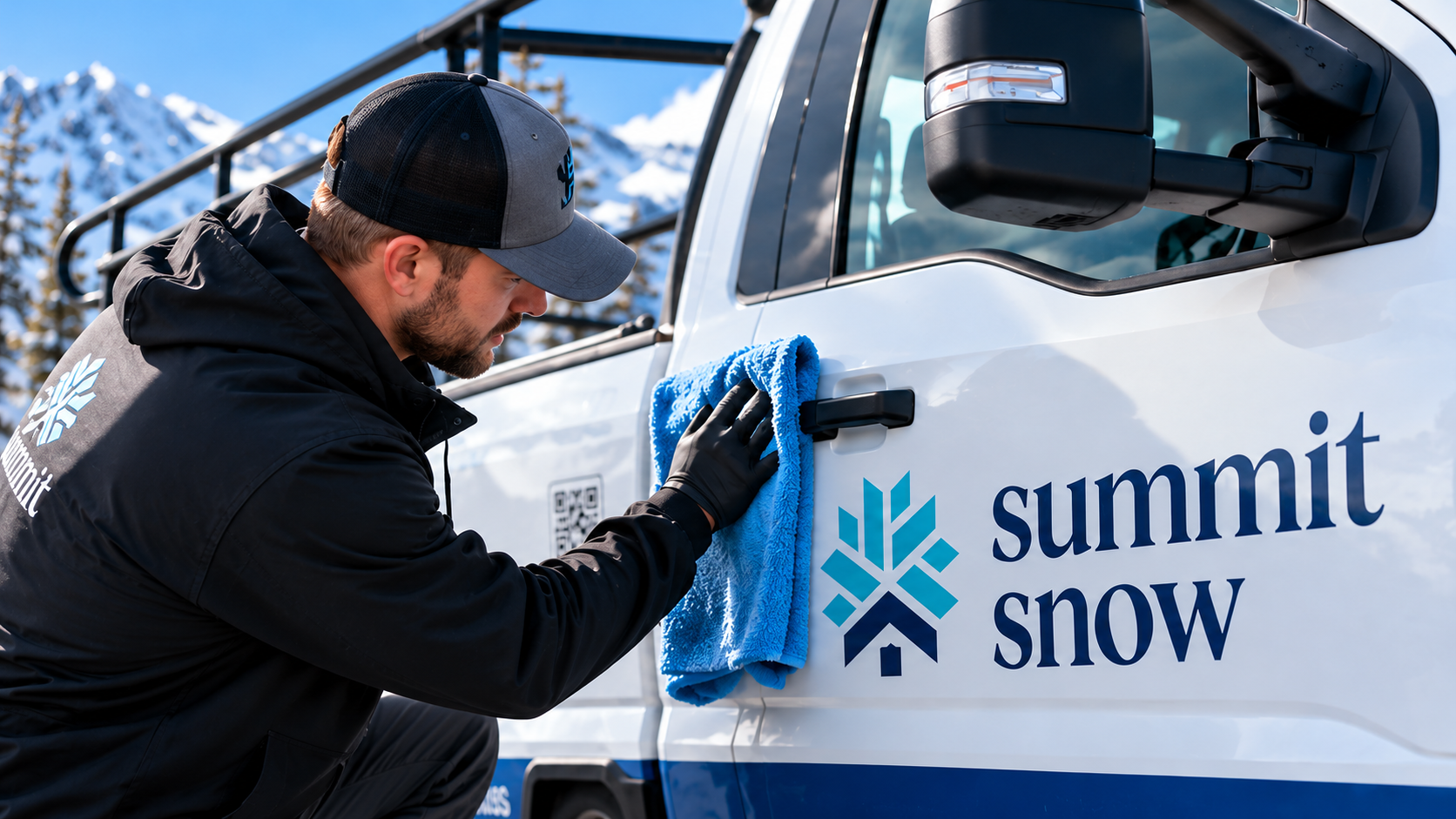
5. Dry it right away
You’ve washed your vehicle. Nice work! But don’t call it a day just yet.
Leaving water behind in freezing temperatures can create a problem you won’t see right away.
Water left on the wrap can freeze in seams and along edges. As it expands, it can pry the vinyl up over time.
Dry the vehicle with a clean microfiber towel or a blower after every wash, and give extra attention to door edges, handles, mirrors, and panel gaps.
A few extra minutes with a towel can make a big difference.
6. Put the ice scraper down
We need to have a quick word about ice scrapers.
They’re great for windshields. Wrapped panels? Not so much.
Ice scrapers, snow brushes with hard bristles, and anything metal will scratch, gouge, or tear your wrap. Scrapers belong on glass only.
To clear snow off wrapped panels, use a foam snow broom and push the snow off gently.
For ice, let the vehicle warm up and the ice melt on its own. Skip the chemical de-icer sprays on the vinyl itself, since many are not made for wrap films.
We know waiting for ice to melt isn’t anyone’s favorite winter activity, but it’s a lot better than accidentally taking a chunk of your wrap with it.
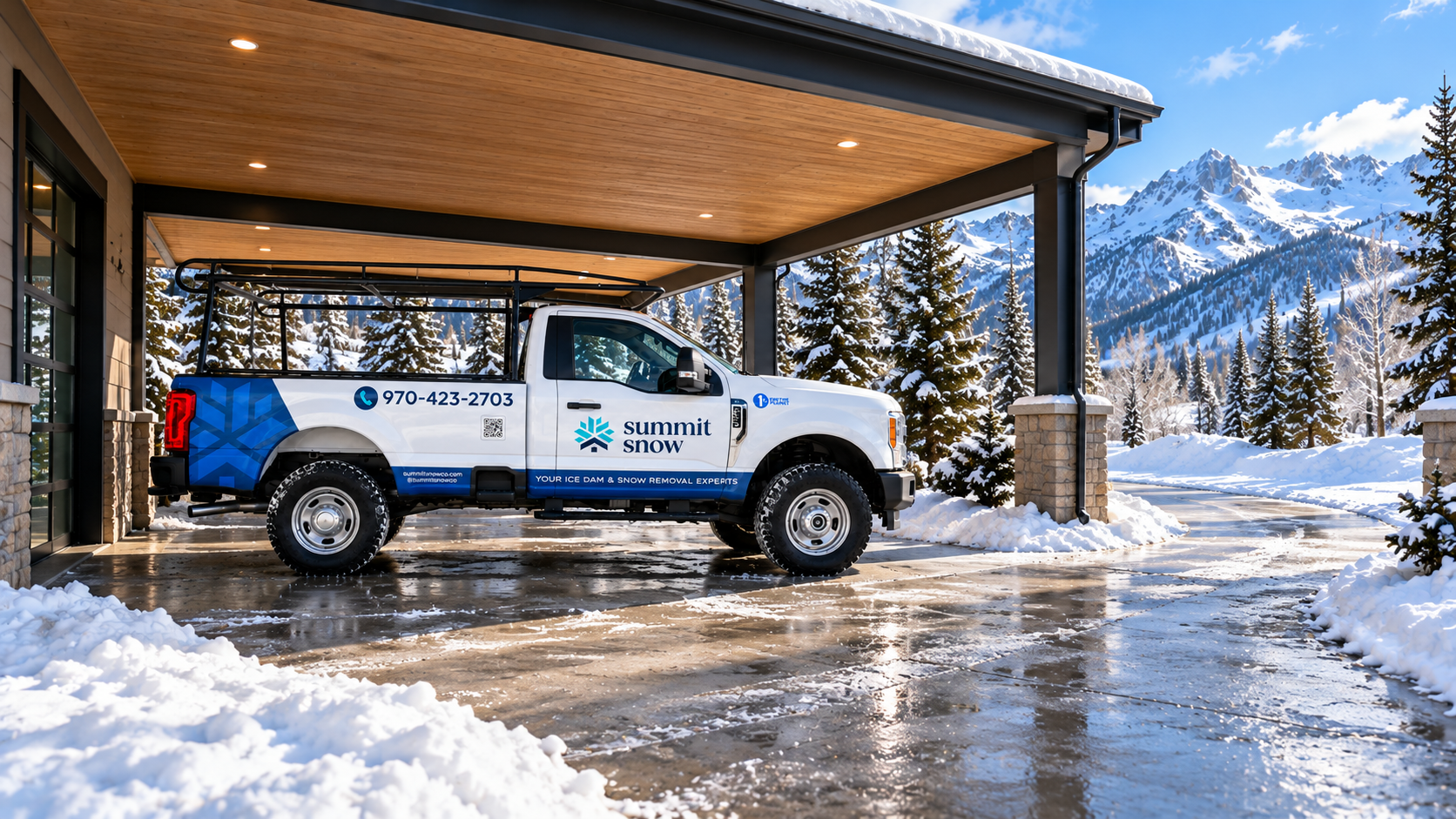
7. Park smart when you can
Sometimes the best way to protect your wrap from winter weather is to give it a break from the weather altogether.
A garage, carport, or covered lot keeps snow, ice, and salty spray off your vehicle in the first place. That means less cleanup and less wear.
If indoor parking isn’t an option, a breathable, soft-lined vehicle cover can help.
Just make sure the vehicle is clean before covering it so trapped grit doesn’t rub into the wrap.
Of course, covered parking isn’t always an option, especially for a whole fleet. But when it’s available, your wrap will appreciate it.
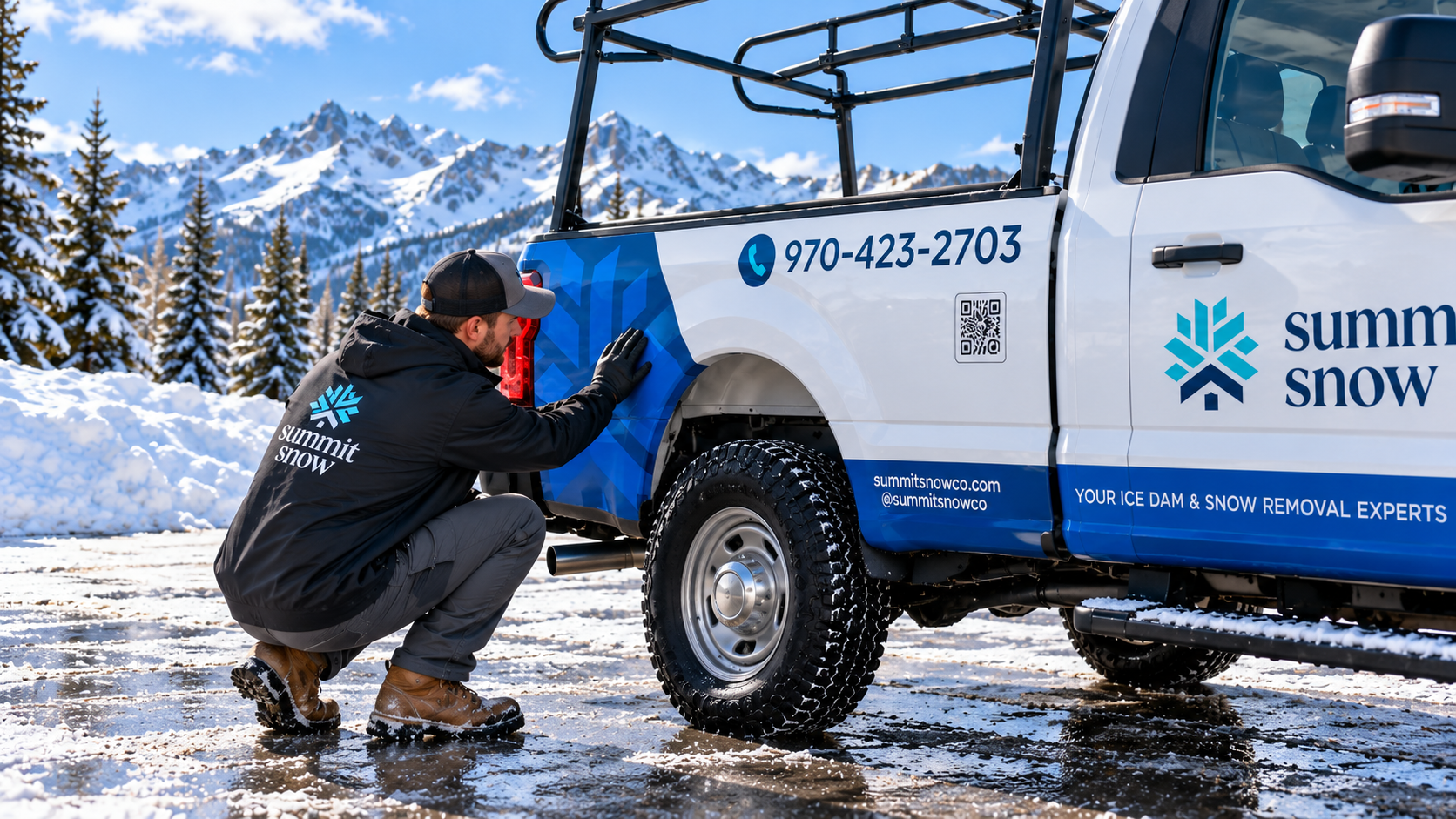
8. Do a quick walkaround every week
Here’s one of the easiest ways to catch a wrap problem before it becomes a bigger one: take a lap around the vehicle.
Seriously. Just 60 seconds once a week.
Weekly walkaround checklist
- Lifting edges or corners, especially around doors, bumpers, and handles.
- Bubbles or wrinkles that weren’t there before.
- Scratches, tears, or chips from road debris.
- Salt staining or a hazy film that doesn’t wash off.
Catching lifting edges or bubbling early can help prevent further damage. If you spot something unusual, contact Wrapmate so we can help you determine the next steps.
Keep in mind that damage from environmental factors like rock chips, road debris, and salt isn’t covered under your Wrapmate warranty. That’s one more reason the washing, drying, and parking habits above are worth it.
Think of it as a quick checkup for one of your hardest-working business assets.
One thing to skip: wax, sealants, and ceramic coatings
More protection sounds like a good thing, right?
Not necessarily.
It’s tempting to add a “protective layer” before winter, but don’t do it without talking to us first.
Wax, sealants, and ceramic coatings can damage the film and may void your warranty.
A coating also locks in the wrap’s current condition, so no corrections can be made to the wrap afterward.
If you’re considering a coating, please reach out to Wrapmate before applying anything.
When in doubt, ask first. We’d much rather help you protect your wrap than troubleshoot a coating that shouldn’t have gone on it.
Winter wrap care FAQ
Can road salt damage a vehicle wrap?
Yes, if it’s left on too long. Salt and de-icing chemicals can stain the film, dull the finish, and work into the edges over time. Regular washing through the winter is the best defense.
Is it safe to take a wrapped vehicle through a car wash in winter?
We recommend hand washing only. Automated washes, touchless included, carry risk and will void your Wrapmate warranty.
Can I use an ice scraper on my wrap?
No. Use scrapers on glass only. Clear snow from wrapped panels with a foam snow broom and let ice melt as the vehicle warms up.
Will cold weather make my wrap crack or peel?
A professionally installed, quality wrap is built to handle cold climates. Problems usually start when edges get damaged or water freezes in seams, which is why drying and weekly checks matter.
Can I get a vehicle wrapped in the winter?
Yes! Installs happen indoors in a temperature-controlled shop, so the cold outside isn’t an issue. Just hold off on the first wash for at least 48 hours while the adhesive sets.
How long does a vehicle wrap last?
With good care, most commercial wraps last several years. Consistent washing, smart parking, and fixing small issues early all help you get the most out of your investment.
Keep your wrap looking sharp all year
Winter is rough on the roads. It doesn’t have to be rough on your wrap.
A little extra washing, smart parking, and regular inspections can keep your wrap looking great long after winter ends.
Need a little wrap TLC or ready to wrap another vehicle? We’re here to help.