Commercial Trucks Need Commercial-Grade Wraps — Here’s Why It Matters

Wrapping a commercial truck is not the same as wrapping a pickup. The vehicle is larger, the panel geometry is more complex, the film has to work around cargo doors and body lines designed for utility rather than aesthetics, and the installation stakes are higher because the truck may be in service immediately upon completion. Getting it right requires experience, the right materials, and a team that has wrapped commercial vehicles before — not just passenger cars.
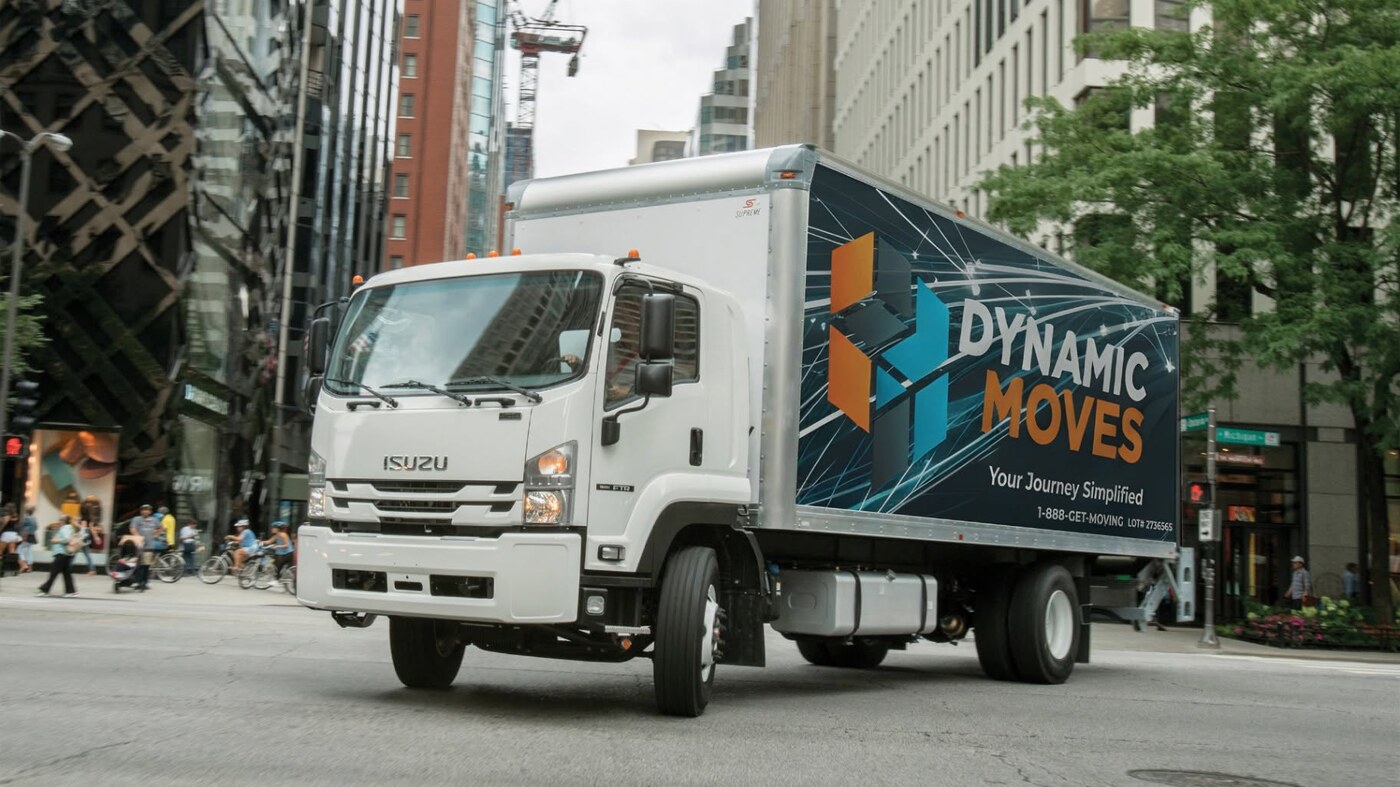
Wrapmate’s collaboration with Justin Neal and Isuzu Motors on two Isuzu NPR-HD trucks demonstrates what the right partnership looks like from manufacturing through final delivery. From build to wrap to road-ready, every step was handled with precision — and the end result is a pair of commercial trucks that look as professional as the brand they represent.
For companies spec’ing new commercial trucks — box trucks, NPR-HDs, flatbeds, specialty vehicles — incorporating wraps into the delivery process before the vehicles enter service is one of the most efficient ways to ensure a consistent, professional fleet from day one.
Why commercial trucks are different from light-duty vehicles
The Isuzu NPR-HD is a medium-duty commercial truck — a different class of vehicle than the vans and pickups that make up most fleet wrap jobs. The panel surfaces are larger and flatter, which is an opportunity for more impactful graphics. But the body also includes features that require experienced wrap installation: wheel wells, running boards, cargo door frames, mirror housings, and body lines that have to be wrapped around rather than through.
Bubble-free installation on large flat surfaces requires skill and the right environmental conditions. Edges and corners on commercial vehicles are high-stress points where film can lift if not properly applied and heat-sealed. An installer who has worked primarily on passenger vehicles may not have the experience to execute a commercial truck wrap at the quality level the vehicle and the brand deserve.
Wrapping at delivery: the most efficient approach to fleet branding
Companies that wait until trucks are already in service to wrap them face a scheduling challenge: taking a working vehicle off the road for installation time. For businesses where the truck is generating revenue every day it operates, that downtime has a real cost. Coordinating the wrap at or near delivery — before the vehicle enters the service rotation — eliminates that friction.
For fleet operators ordering multiple vehicles at once, delivery coordination is also an opportunity to standardize: all trucks wrapped to the same spec, at the same quality level, before any of them enter service. The fleet looks consistent from the first day, without requiring separate wrap appointments for each vehicle as they come off the lot.
The commercial truck as the most visible billboard in the fleet
Isuzu NPR-HDs and similar medium-duty trucks are often the largest vehicles in a company’s fleet and among the most visible on the road. Their height and panel size make them more readable than pickups or vans. A well-designed wrap on an NPR-HD is visible from farther away, readable at higher speeds, and more memorable to other drivers. For companies where the truck is a significant visual asset — food distribution, medical supply, specialty retail, event logistics — the commercial truck wrap may deliver more impressions per mile than any other vehicle in the fleet.
For businesses that invest in commercial truck fleets, the wrap investment is proportionally small relative to the vehicle cost — and the visibility return is proportionally large relative to the wrap cost. The economics of commercial truck wraps are among the strongest in fleet branding.
Designing for commercial truck proportions
Commercial truck wrap design is a different discipline than passenger vehicle design. The large, vertical side panels reward bold graphics and typography at a scale that would be overwhelming on a pickup. Readable from fifty feet. High-contrast color schemes that work in motion. Design elements that use the vehicle’s proportions intentionally rather than fighting them. Working with a designer who has experience with commercial vehicle templates ensures that the design is built for the actual surface area, not adapted from a smaller vehicle after the fact.
Finding qualified commercial truck wrap installers
Not every wrap installer has experience with commercial vehicles. Wrapmate’s network includes vetted professionals who specialize in medium and heavy-duty commercial applications — with the equipment, experience, and workspace to handle vehicles at this scale. For companies adding commercial trucks to their fleet, working through Wrapmate ensures that the installer assigned to the job has the right qualifications for the vehicle type.
Commercial truck and fleet wraps
Big trucks. Bigger impressions. Let’s wrap them right.
Wrapmate connects businesses with qualified commercial vehicle wrap installers who deliver professional results on medium and heavy-duty fleets.
Get a fleet quote