Understanding Wrap Color: What to Know Before You Choose

Wrap color does not behave the way screen color does. Before you lock in a color, it helps to know what can shift between the file, the film, and your driveway.
This guide covers what the common color references mean, how finish changes the way a color reads, and why we recommend a physical sample.
Screen Color vs. Real-World Color
Your screen displays color with light (RGB). Vinyl film is a physical material that reflects light instead. Because of that difference, a color almost always looks at least a little different in person than it does on your monitor.
Screen brightness, calibration, and even the time of day change how a color appears, so a deep blue might look navy on one screen and electric on another.
Good to know
Never make a final color decision from a screen image alone.
Hex, RGB, CMYK & Pantone: What They Mean
Most customers come to us with a color reference already in hand. Here’s how we work with each one.
Hex Codes (#RRGGBB)
A six-character code used in web and digital design (e.g., #0C7EFA, Wrapmate’s brand blue). It describes light on a screen, not physical pigment. We convert it to a print-ready color profile: accurate, but the physical result may shift slightly, especially for very saturated or neon shades that vinyl ink can’t fully reproduce.
RGB Values
Red, Green, and Blue values from 0–255 that describe the same light-based color as a hex code, just in a different format. Same benefits, same limitations.
CMYK Values (Cyan, Magenta, Yellow, Key/Black)
CMYK is a print-based color model that mixes four inks (cyan, magenta, yellow, and black) rather than light. It’s the standard format for commercial printing and is closer to physical output than hex or RGB, though it’s still calibrated for paper, not vinyl. When you provide CMYK values, our design team maps them into the color profile used for printed wrap graphics. As with any code, the final vinyl color may shift slightly, since ink-on-paper and ink-on-vinyl don’t behave identically.
Pantone (PMS)
A standardized system built for physical printing and manufacturing, defined by ink formulas rather than digital values. This makes Pantone the most reliable bridge between design and physical output. We match it to the closest catalog film or use ICC color profiling for printed graphics.
| Reference | Based On | Best For |
|---|---|---|
| Hex Code | Digital light | Quick digital reference |
| RGB | Digital light | Design files |
| CMYK | Print ink | Print-ready graphics |
| Pantone (PMS) | Physical ink | Precise brand/print matching |
Finish Changes How a Color Reads
Vinyl comes in finishes like gloss, matte, satin, metallic, brushed, and chrome. The finish can change how a color looks as much as the color itself.
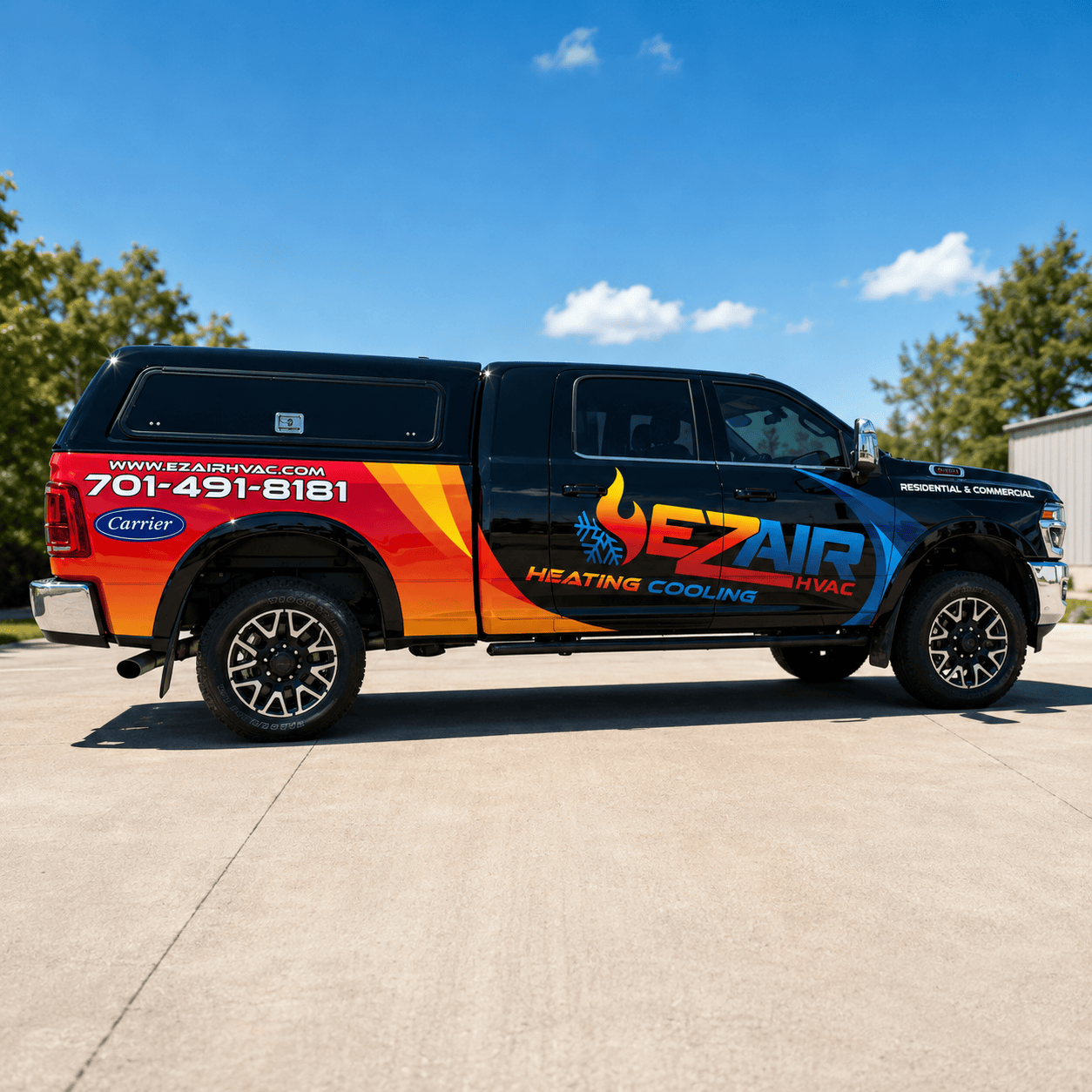
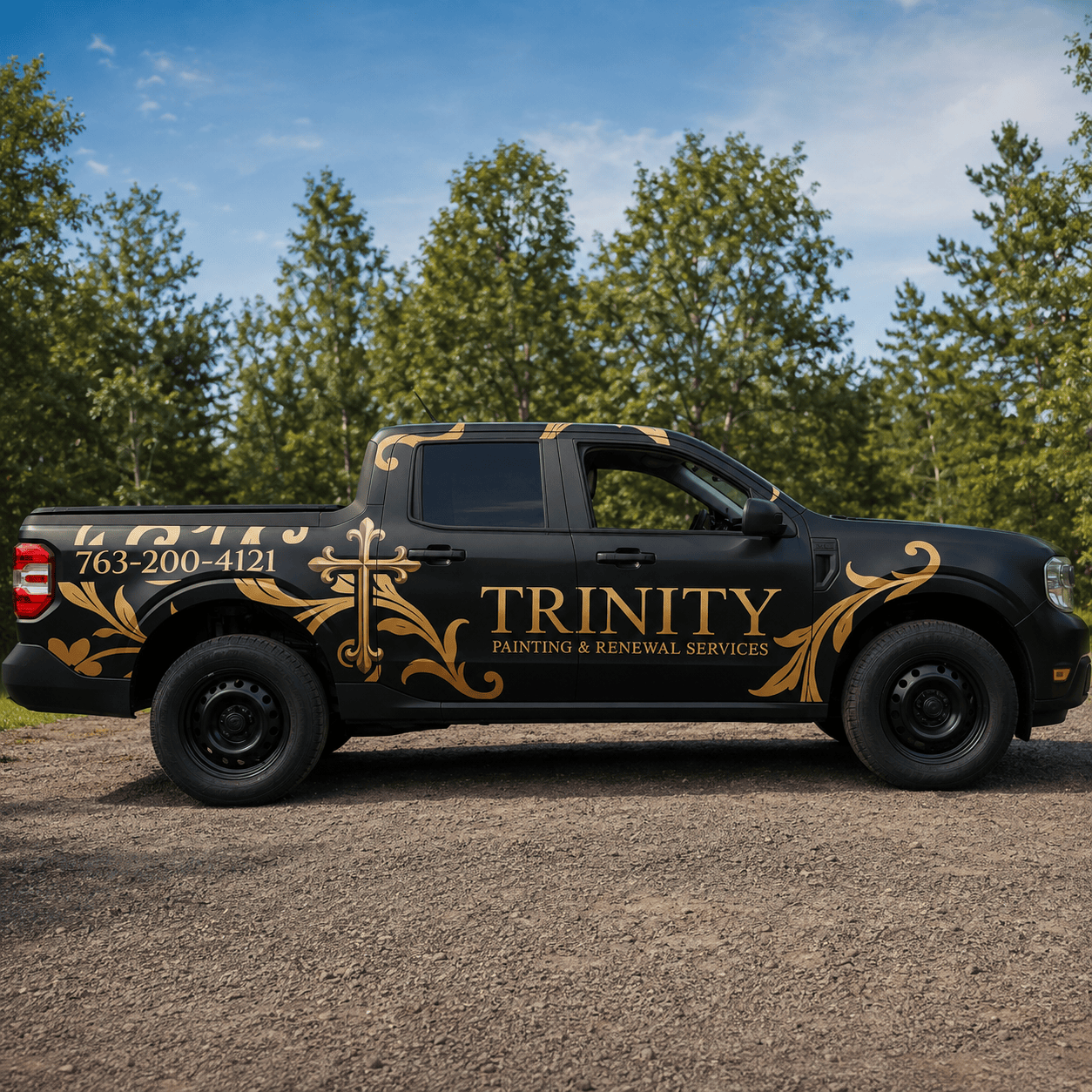
A matte black and a gloss black share the same base color, but they can look like two completely different colors side by side. Always consider finish and hue together.
Matching Your Wrap to Paint
For partial wraps, some painted areas stay visible alongside the vinyl. Even when paint and vinyl start from the exact same color spec, they can look different side by side. Paint is a liquid, chemically-cured finish, while vinyl is a manufactured film. Different textures reflect and absorb light differently.
Good to know
If color precision against existing paint matters, tell us upfront and ask us about a sample.
Fading Over Time
All colored materials shift in appearance with UV exposure over time, typically fading toward a lighter, washed-out version of the original. Premium films from manufacturers like 3M are engineered to resist this.
How fast this happens depends on climate and storage. A vehicle parked outdoors in Phoenix will fade faster than one garaged in Seattle. If you’re matching a color to an existing wrap, keep in mind the original may have shifted.
Why We Recommend a Physical Sample
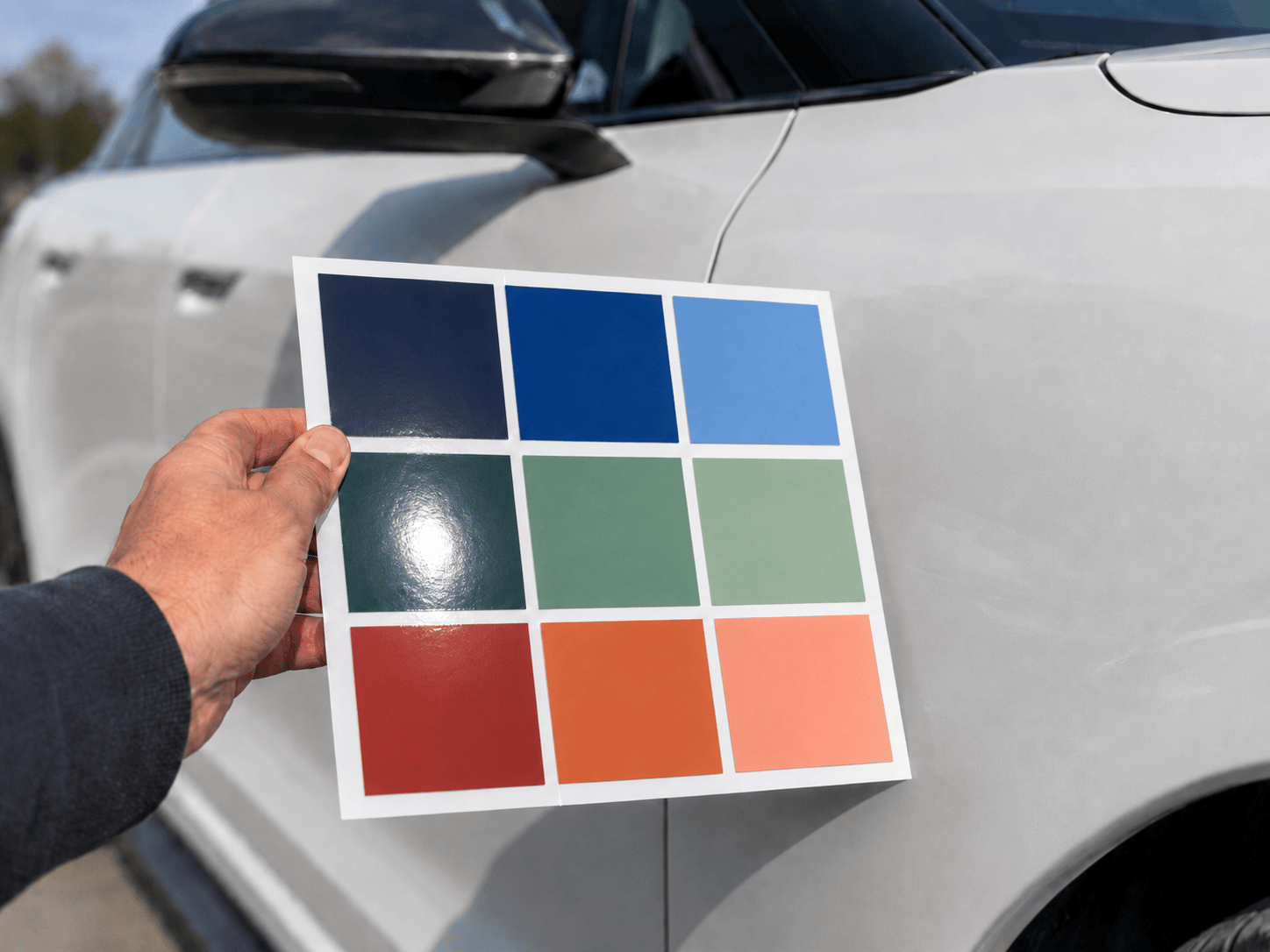
Color is physical, and it’s affected by light, finish, and environment in ways no screen or catalog photo can fully capture. A sample is a real cut of the actual film: same finish, same color, same texture that would go on your vehicle.
How to evaluate your sample
- Take it outside. Sunlight is the most honest light source.
- Hold it against your vehicle, especially near painted areas that will stay exposed.
- Compare multiple options side by side if you’re deciding between colors.
- Check it in your garage under your typical everyday lighting.
- Live with it for a day or two before committing.
Before you commit
Not sure about a color? Ask us first.
A sample costs a fraction of a wrap, and it’s the easiest way to make sure you love your color before it’s on your vehicle.
Visit our support page →